


Warehouse Labels and Their Role in Modern Warehouse Operations
Warehouse labels underpin structured, accurate warehouse operations. From SKU labels and pallet rack labelling through to magnetic warehouse rack labels, clear identification supports picking accuracy, stock control and long-term warehouse efficiency.
When warehouse labels are planned as part of an overall location strategy, they create clarity across racking, aisles and storage zones. When they are added reactively, inconsistencies quickly appear.
Contents
Why Warehouse Labels Can Fail in Practice
Most warehouse environments do not struggle because labels are missing. They struggle because labels lack structure.
Common problems include:
- Pallet rack labelling that does not follow a consistent numbering logic
- SKU labels that do not match system data
- Locations labelled differently across departments
- Magnetic labels for racking were added without a wider framework
- Print SKU labels produced in-house without standardised sizing or placement
These inconsistencies create friction in warehouse operations. Small delays accumulate. Mispicks increase. Teams rely on individual knowledge instead of a structured labelling system.
Over time, this reduces warehouse efficiency and increases operational risk.
Building a Structured Warehouse Labelling Framework
Effective warehouse labels are not simply printed and applied. They are designed around a clear framework.
A structured warehouse labelling approach should include:
- A logical location numbering system
- Clear aisle, bay and level identification
- Alignment between physical labels and digital systems
- Consistent formatting across all labels for warehouses
- Defined standards for size, placement and readability
This framework ensures pallet rack labelling and SKU labels work as part of a coordinated system rather than as isolated identifiers. It also helps ensure labels align with warehouse management systems and scanning processes.
Whether businesses print SKU labels with a SKU label printer or source them externally, the consistency of the structure determines long-term performance. Barcode rack labels and other scanning identifiers are often used to support this alignment.
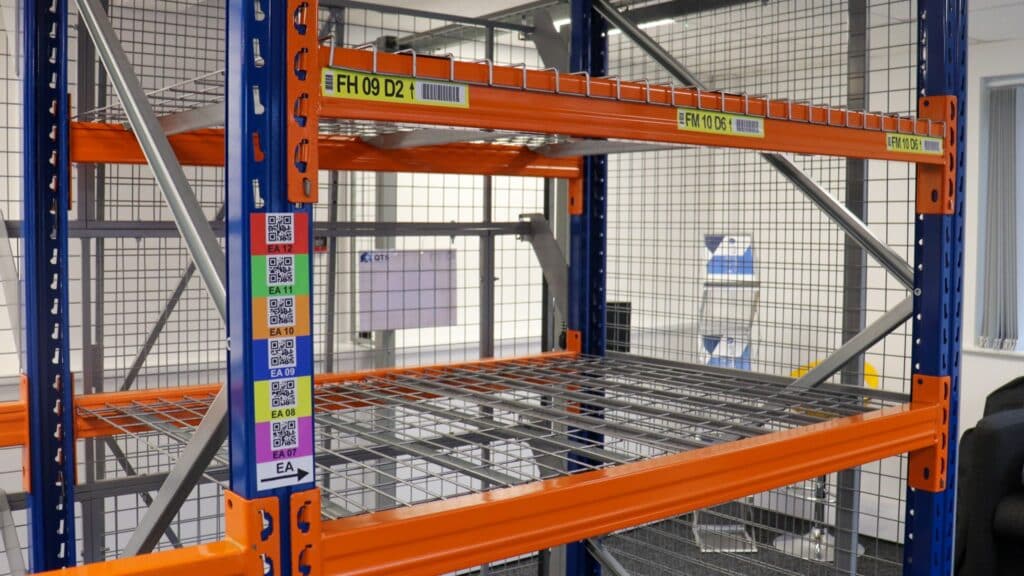
The Role of Magnetic Warehouse Rack Labels
Magnetic warehouse rack labels are particularly valuable in environments where layouts change.
They allow warehouse racking labelling to adapt without permanent alteration, supporting evolving layouts while maintaining identification accuracy. When used within a defined numbering strategy, magnetic labels for racking provide flexibility without sacrificing structure.
However, flexibility only works when the underlying location logic is consistent. Without that foundation, even magnetic systems can create confusion.
Warehouse Labels and Picking Accuracy
Warehouse labels directly influence day-to-day performance.
- Clear pallet rack labelling reduces mispicks.
- Accurate SKU labels improve scanning reliability.
- Consistent warehouse racking labelling supports faster replenishment and clearer stock visibility.
When every storage position is clearly defined and easy to interpret, warehouse operations become more predictable and efficient.
This is not simply about compliance or appearance. It is about operational control.
Integrating Labelling into Warehouse Planning
Warehouse labels deliver the greatest value when considered at the design stage, not after installation.
Location numbering, pallet rack labelling and SKU labels should align with:
- Racking configuration
- Workflow patterns
- Replenishment strategy
- Digital inventory systems
- Future expansion plans
When labelling is treated as part of the overall warehouse infrastructure strategy, it strengthens operational clarity from day one and supports long term warehouse efficiency.
Planning Warehouse Labels for Long-Term Performance
To label warehouse environments effectively, businesses must move beyond adding identifiers to visible surfaces.
A structured warehouse labelling system improves picking accuracy, reduces reliance on memory, supports system alignment and strengthens warehouse operations over time.
Warehouse labels are simple in appearance, but when designed correctly, they form the backbone of organised, scalable storage environments.
Contact Carlos to Discuss Your Customers Warehouse Labelling Requirements carlos.gomez@qts-ltd.co.uk
Share This: