Planning Safety For An Automated Warehouse
Picture a forklift driver who sees someone step out from behind a rack. They’ll brake, sound the horn and wait. An AGV in the same aisle does what its sensors and software tell it to, on the route it was given. That changes the safety brief for an automated warehouse. People, manual trucks, automated equipment and stock often share the same floor, and each needs protecting from the others. The most reliable way to do that is to plan protection, segregation, and signage together as one system before the site goes live.
Why Automated Warehouse Safety Has To Be Planned As One System
When protection, segregation and signage are specified separately, often from different suppliers, gaps can appear where one product ends and the next begins. On an automated site, those gaps are where accidents can occur.
The vehicles themselves are covered by ISO 3691-4:2023, the international standard for driverless industrial trucks and their systems, which also considers the zones they operate in. The manufacturer and integrator look after the equipment. The physical environment around it, from barriers to partitions to signs, is where your specification makes the difference.
Planning it together at the specification stage means one set of drawings, consistent heights and finishes, and far fewer post-commissioning retrofits.
| Layer | What It Does | Typical Products |
|---|---|---|
| Protection | Absorbs or deflects impact from vehicles and equipment | Racking protection, safety barriers, column protection, bollards |
| Segregation | Keeps people out of automated zones and stock out of aisles | storGUARD™ mesh partitions, rackGUARDIAN™ anti-collapse mesh |
| Signage | Makes every boundary, hazard and route clear | Restricted-area signs, hazard warnings, directional signs, load notices |
Protection Around Automated Routes
Protection is the first layer. Automated vehicles are designed to stop for obstacles, but many sites still run manual forklifts alongside them, and a misplaced load or a technical fault can still bring manual or automated equipment into contact with racking, columns or walls.

Our safety range includes racking protection (end-of-aisle protectors, upright protectors, and rack deflectors), warehouse safety barriers, pedestrian barriers, column protection, and bollards. Where the site calls for it, A-Safe polymer barriers offer the premium option in the range, supplied through our official A-Safe distribution partnership.
Focus protection where different types of traffic meet: crossing points, transfer stations, charging areas and the ends of automated aisles. That’s where contact is most likely.
Keeping People Out Of Automated Zones
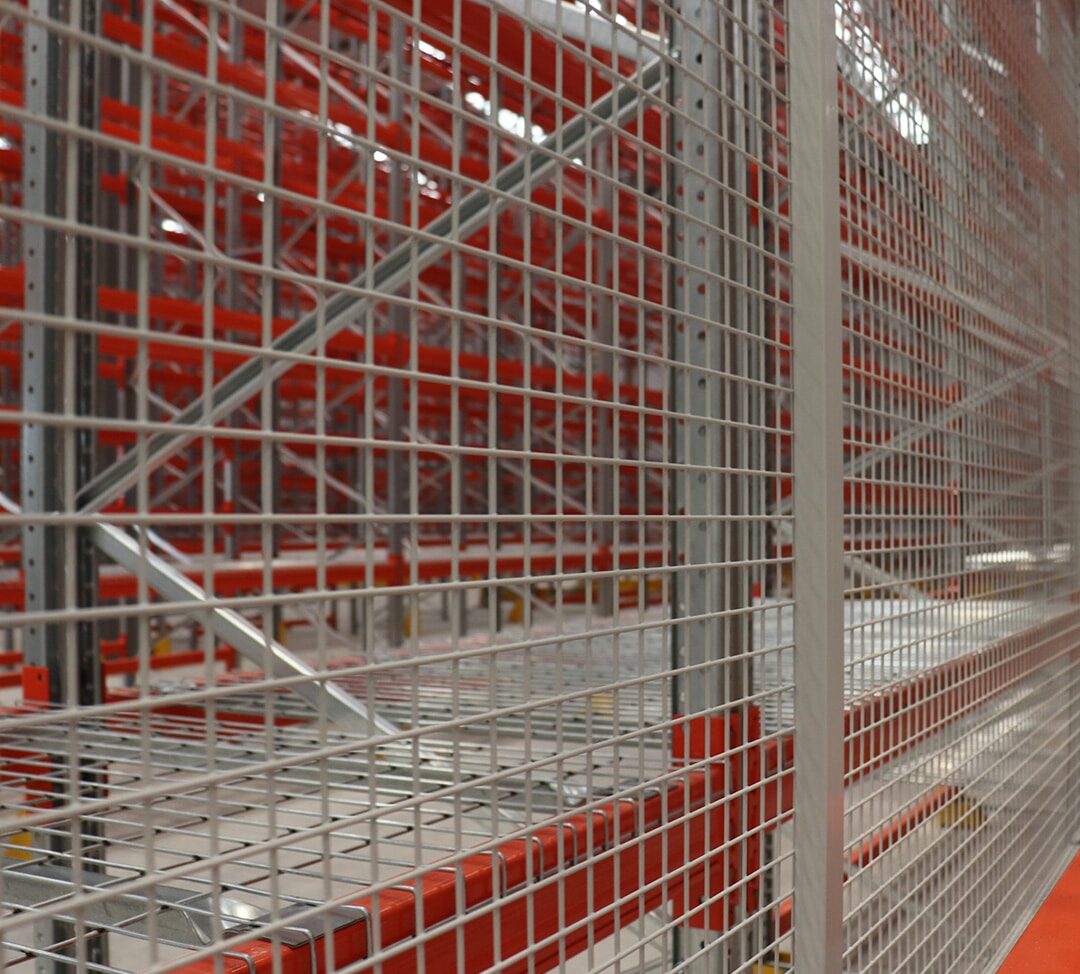
Barriers guide people. Partitions keep them out. storGUARD™ mesh partitions create a physical boundary around automated storage zones, robotic picking cells and AGV-only areas, with controlled access points for the teams who need to get in. Because it’s mesh, people outside can still see equipment moving inside.
Segregation works best when you specify the pieces as one. A pedestrian barrier defines the walkway, a storGUARD™ partition closes off the zone, and a restricted-area sign marks the entrance. Specify one without the others, and people start finding shortcuts.
You can configure a storGUARD™ cage or partition in the configurator on Quote to Site® and get an instant quote.
Keeping Stock In The Rack
rackGUARDIAN™ anti-collapse mesh fixes to the rear and sides of pallet racking bays to stop stored goods from falling through or out of the rack. On an automated site, that matters twice over. Fallen stock in an aisle is a hazard to anyone nearby, and it can obstruct automated equipment and hold up the whole operation.
It’s available in 50×50, 50×100 and 25×25 mm apertures, made in-house with bespoke sizing. The rackGUARDIAN™ configurator on Quote to Site® takes your customer’s racking dimensions and produces the full set of panels needed to cover the back of the racking, with a quote.
Pair it with racking protection at the base and load notices on each bay, and the rack is protected from impact, contained and clearly rated.
Signage That Makes Every Boundary Clear
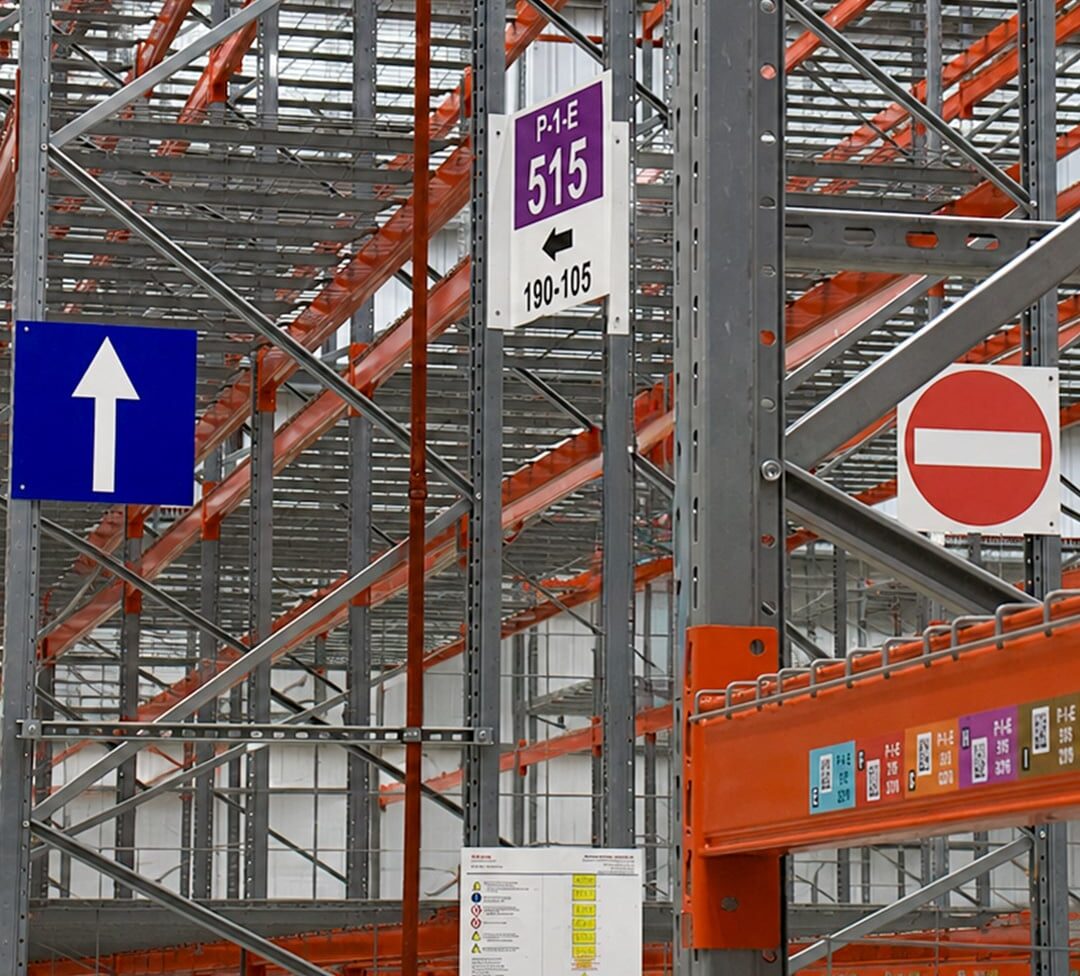
Physical barriers work better when people understand them. Every automated site needs restricted-area signs at each zone entrance, hazard warnings where equipment operates, directional signs for pedestrian routes and load notices on the racking.
We print our safety signage in-house on rigid or flexible materials, with a durable finish suited to warehouse environments. That means signs can be sized and worded for the site rather than picked from a generic catalogue, and delivered alongside the barriers and partitions they support.
Using Vertical Space For An Automated Pick Area
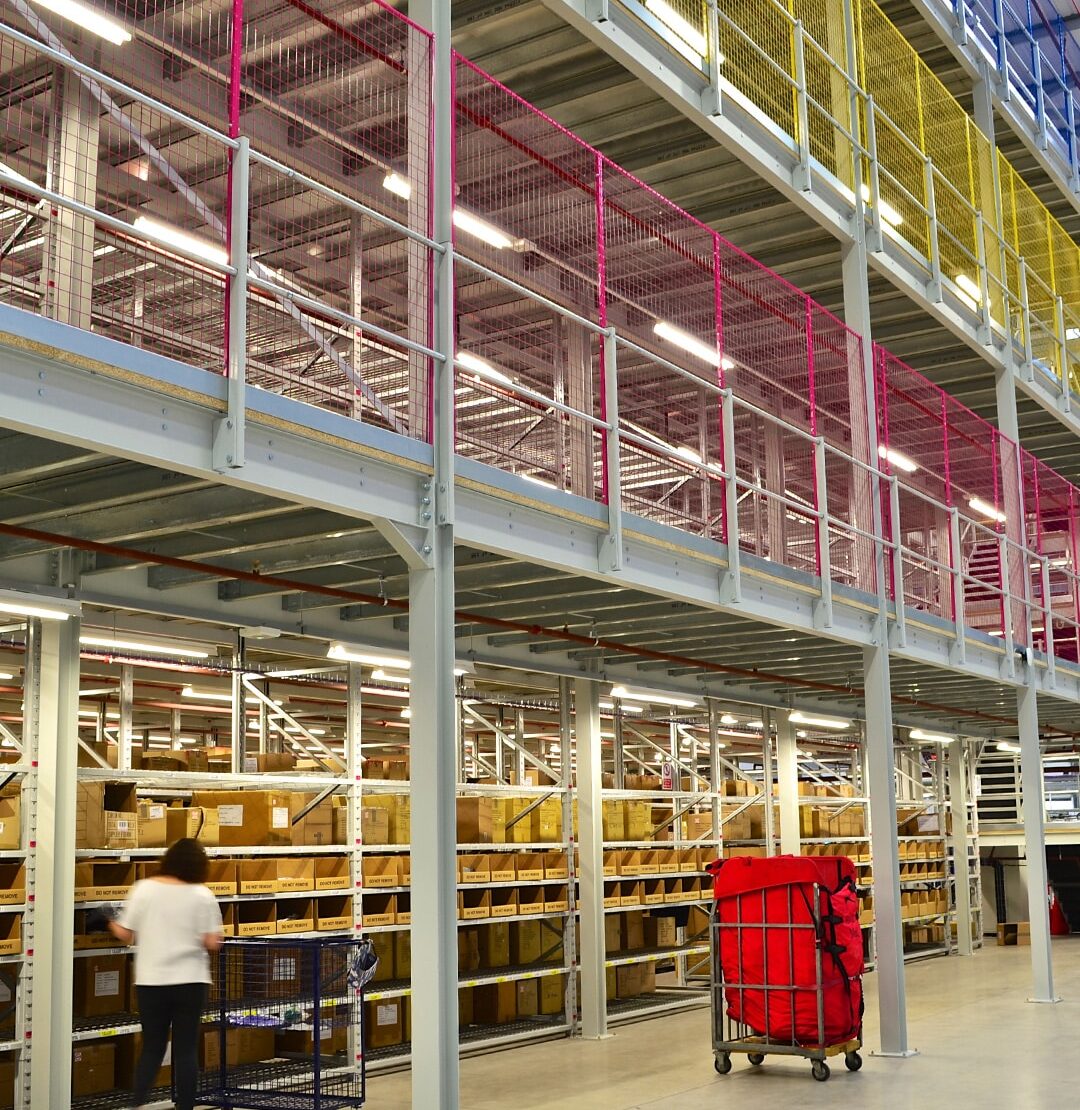
Some sites need room for an automated or semi-automated pick area but can’t grow their footprint. A mezzanine floor can create that space by using the building’s height and housing the pick area above ground-level storage.
QTS designs, manufactures, and installs HiStore mezzanine floors to EN1090 (execution class 2), from site survey through to installation. Our design engineers look at the loads and equipment involved as part of the design. Safety also meets the new level, with handrails, staircases, pallet gates, and fire protection, plus the same barriers, partitions, and signage used on the ground floor.
Why One Supplier For The Whole Safety Solution Helps
Sourcing protection, segregation, and signage from one supplier removes much of the friction from an automated project.
- One quote to wait for. You’re not chasing prices from several suppliers before you can go back to your customer.
- Deliveries planned around your programme. Everything can be coordinated to the project schedule, so products arrive when the site needs them.
- Changes handled in one place. If the specification changes during the project, you only need to tell one supplier.
- Help with the specification. We can help you plan a solution that fits exactly what your customer needs, both in budget and functionality.
- A supplier you can trust. You work with one trade partner you know across every part of the safety solution.
Frequently Asked Questions
Do Automated Warehouses Still Need Safety Barriers?
Yes. Most automated sites still have people on the floor, and many run manual forklifts alongside automated equipment. Barriers protect racking, columns and walkways from impact and guide pedestrians away from automated routes. They work alongside the vehicle’s own safety systems rather than replacing them.
Which Anti-Collapse Mesh Aperture Should I Specify?
It depends on the smallest item stored in the bay. A 25×25 mm aperture suits smaller goods that could pass through a larger mesh or for containing aerosol products, while 50×50 mm and 50×100 mm apertures suit larger cartons and pallet loads. If you’re unsure, our team can advise on the right option for your customer’s stock.
Plan It Once, Plan It Together
Every automated project brings its own mix of people, vehicles and stock. Sites run most smoothly when you specify protection, segregation, and signage as one system from the start, so you don’t have to add anything once the equipment is running.
If you have an automated or semi-automated project in the pipeline, talk to our team about the full safety solution for your customer’s site.
Share This: